Hello Fellow Artists!
In today’s post I want to share some of my studies from the amazing work of George B. Bridgman.
I have learned a lot from his work over the years but I still have to revisit his book from time to time.
In this post I will be sharing some of my studies from his book, “Constructive Anatomy.” A must have for any serious figure drawing and character design artists out there!
What I enjoy most about Bridgman’s work is his powerful sense of structure and solid forms.
Drawing the Arm Anatomy
I study a few different art books for drawing anatomy but I have to say that this one is by far the best for certain reasons.
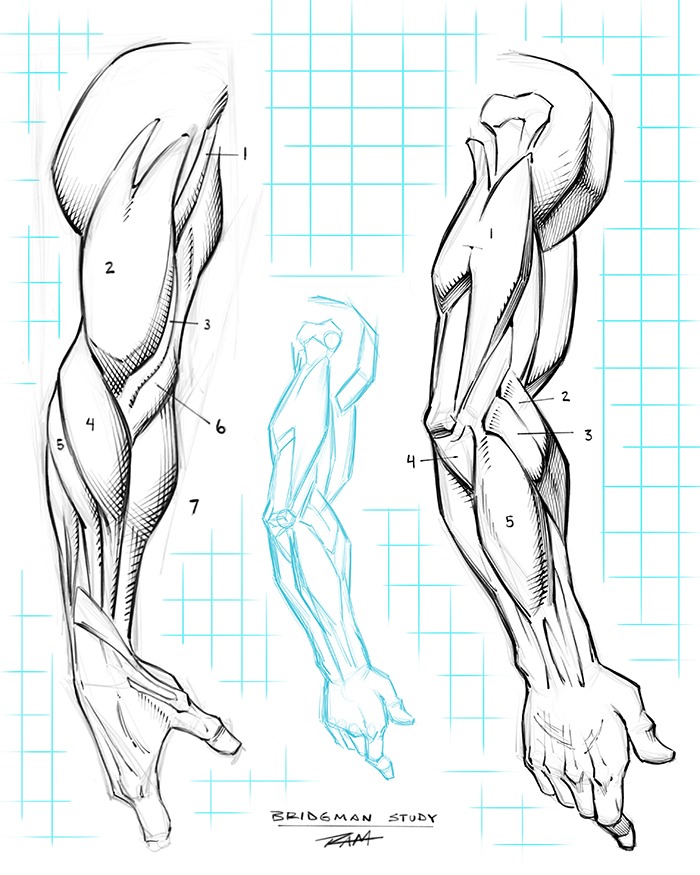
As he explains the anatomy of the arm, he makes it very clear that the forms wrap around one another but also keeps a strong emphasis on the volumes.
Many anatomy books don’t focus on this powerful sense of volume like Bridgman does.
This is probably the primary reason that this book is often the “go to” for comic artists when talking about improving one’s anatomy drawings.
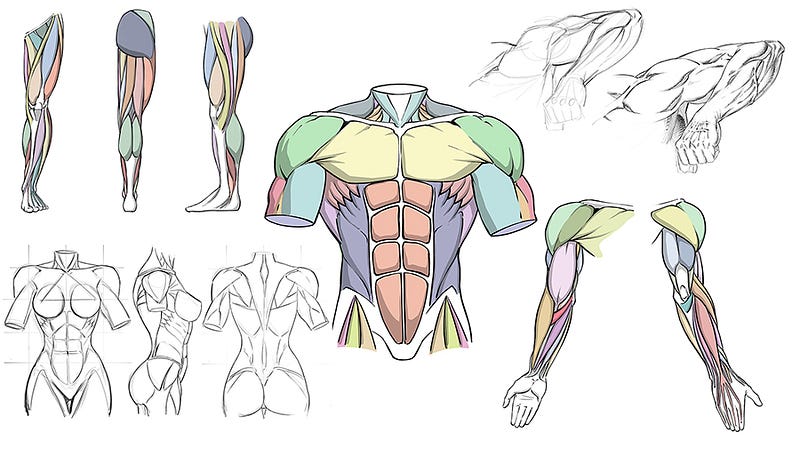
Here is an image and a quick video where draw the front and back of the arm from his book —
Drawing the Leg Anatomy from Bridgman
Now let’s work on the legs. Here are some more of my drawings and a time lapse video of the drawing process.
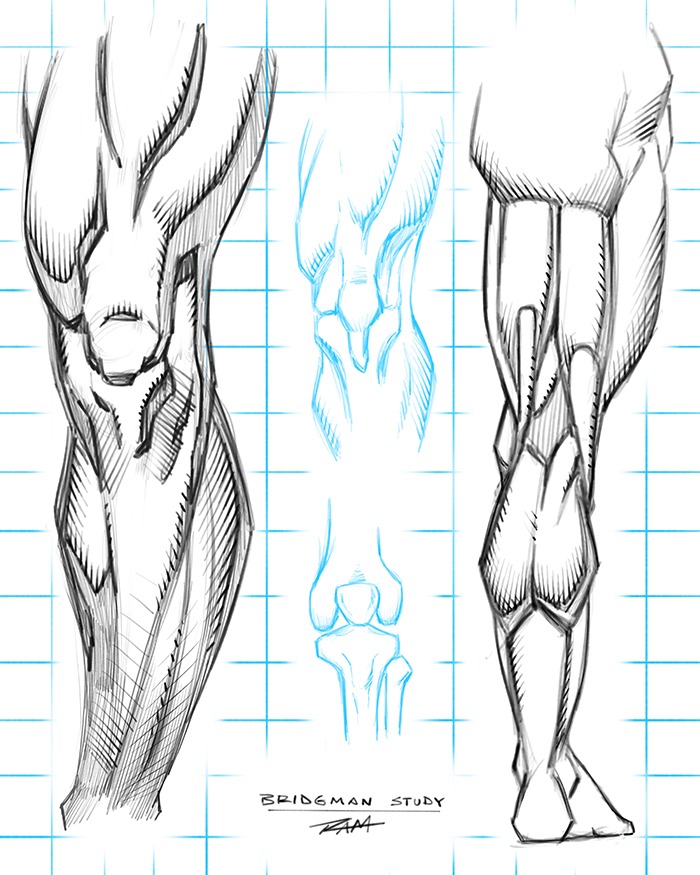
Something that I appreciate about the leg drawings from Bridgman’s work is that he clearly shows the relationships from the muscles that we see and the bones beneath.
He does this all throughout the book with each aspect of the body and it is very relatable. How can we properly draw the human figure if we don’t have some understanding of what lies beneath?
There is a time and a place to study the superficial side of the human body and then there is a time to dig deeper and see how the muscles overlap and interlace together.
Another thing that his leg anatomy illustrations show me is how the forms of the leg are not straight from the top of the thigh down to the ankle.
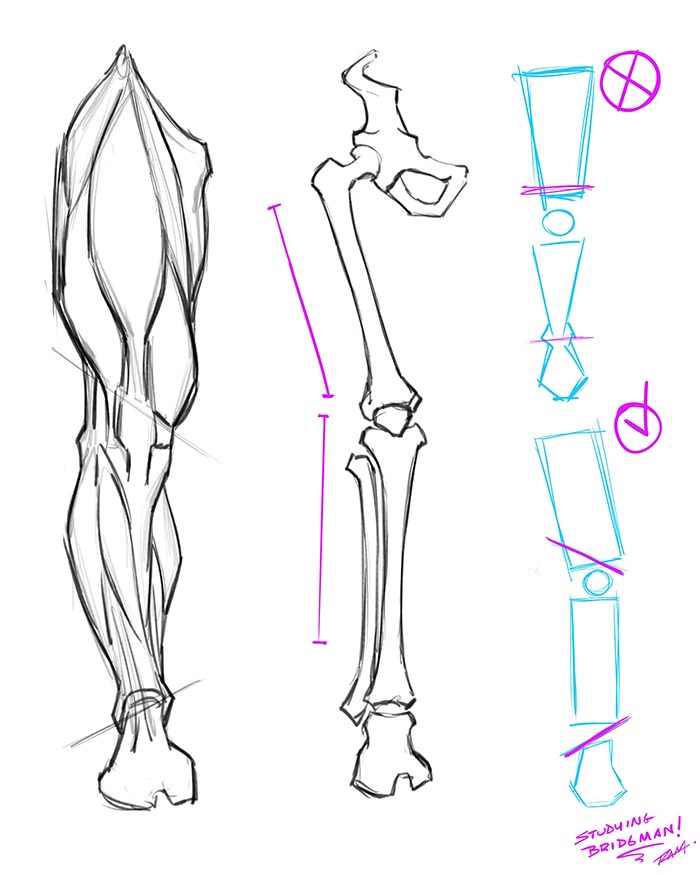
When we first begin to draw arms and legs, most beginners start by drawing them overly symmetrical and with the forms stacked straight up and down.
Bridgman clearly shows how the body is not constructed in that way. I believe it is easy to understand with his illustrations because of his sense of structure and proper use of angles within the work.
Let’s Draw the Torso Anatomy
For this next one I am drawing from his art on page 125. Mine is a pale comparison to his stunning work of course.
I did my best to add a bit of my own style to these illustrations. I believe that we should always try to interpret his work rather than copy it verbatim.
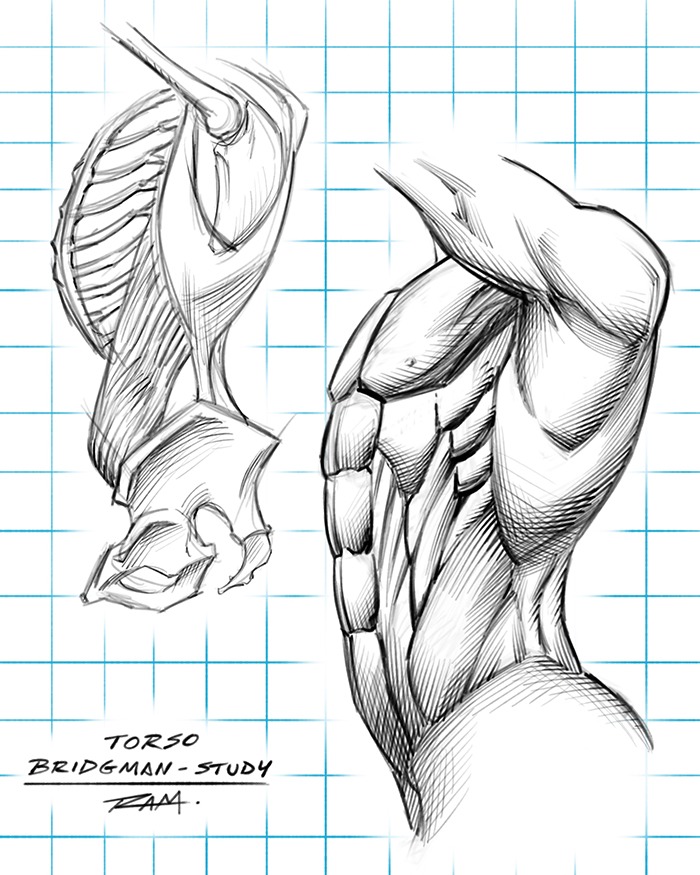
What I really enjoyed about this one was how he focused on the obliques and latissimus dorsi over the skeleton to help us understand what we see and therefore draw it more confidently.
This book Show us the Benefits of Localized Studies
These types of localized studies are very important for us to zero in on the things that we struggle with. I find that they are essential for paying closer attention to the problem areas within our work and gaining a better understanding to move past them.
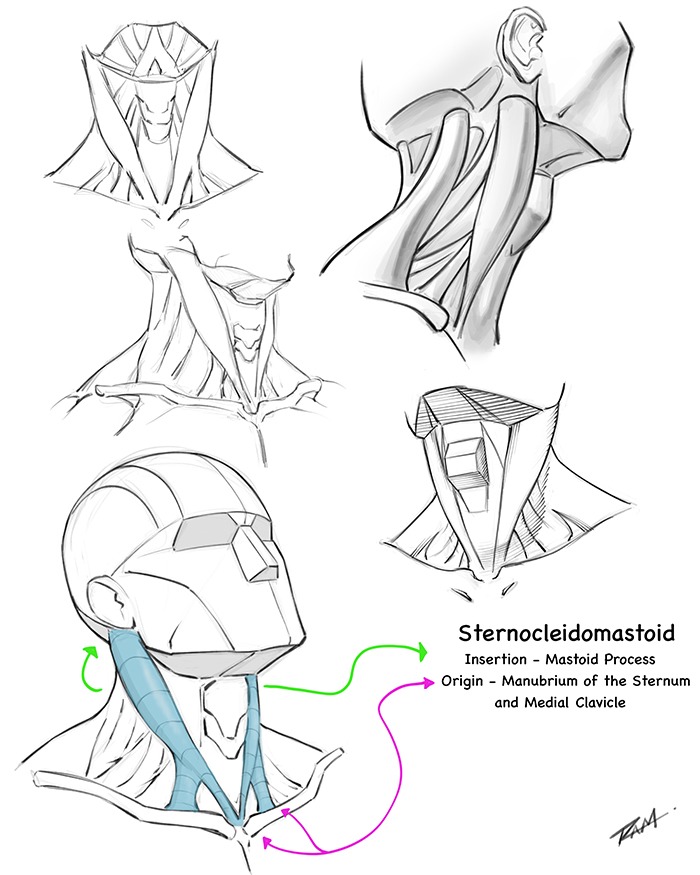
Drawing the Neck Anatomy
For this next part, we will draw the neck anatomy and see what we can learn from his illustrations.
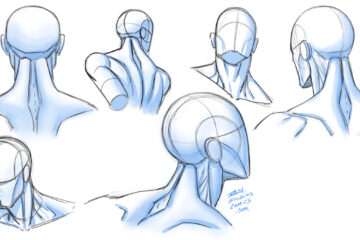
Here are a few drawings of the neck muscles from different angles. Again, I also really like how he draw parts of the neck organically and parts with more defined angles.
Another fantastic aspect about this book is that he goes in-depth to show us the anatomical breakdowns, but also the simplified forms that are grouped together.
To me, this is very important for drawing the neck anatomy. The neck can appear extremely complex when we study anatomy books.
Being able to relate all that information into the right forms and volumes is essential. Bridgman’s work excels in that area.
So I have to say that Bridgman’s work is very inspiring and if you struggle with drawing anatomy that feels solid, you may want to get a copy of his book and fill up those sketchbooks!
Thank you for viewing my post and more on the way soon! 😎✏️
Are you ready to level up your skills on drawing anatomy?
Then please consider my course where we break down the figure piece by piece. You can also share your work and get feedback on how to improve!
Check out this course here and get started today! — How to Draw Dynamic Anatomy Course!
Robert A. Marzullo
Ram Studios Comics

0 Comments